Toilet and Faucet Repair in the USA
Our technicians approach Toilet and Faucet Repair by isolating the shutoff valve first, then measuring static pressure at the fixture to determine whether the issue originates in the supply line or the internal valve seat. Excess pressure above 80 psi can erode washers and seats while low pressure often signals a partially closed main valve or sediment buildup in the aerator screen. Each step documents the flow rate and confirms the absence of back siphonage before any disassembly begins.
Once pressure data is recorded the assembly is examined for worn flappers, degraded fill valve seals or scored faucet cartridges. Replacement parts are selected to match the existing thread pitch and pressure rating so the repaired fixture maintains the same cross connection protection that existed before the failure. All work concludes with a final pressure test and flow verification to verify the fixture no longer allows reverse flow under normal household conditions. Hollywood Backflow Certifications and Repairs documents test results following every toilet and faucet repair to confirm protection of the potable water supply in the USA.
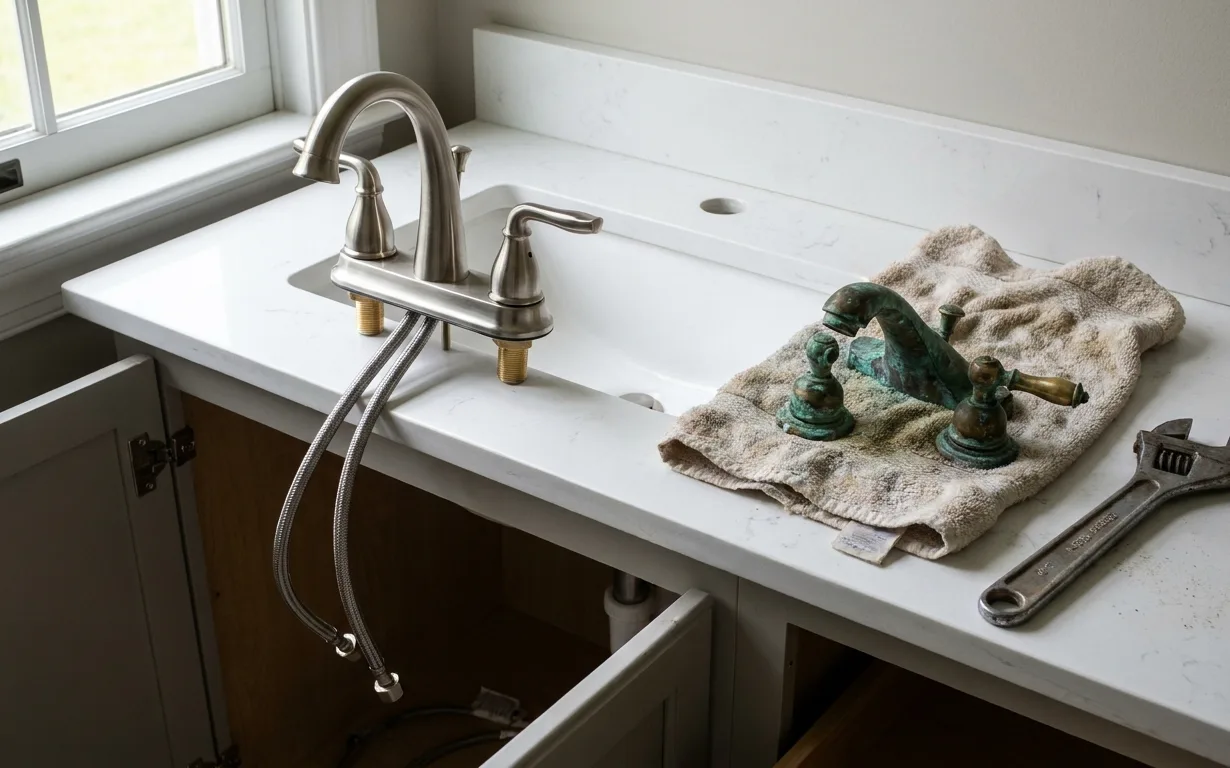
Observable Indications of Fixture Malfunction
- Water continues flowing after the handle returns to the off position.
- Constant refill cycling occurs even when the tank remains full.
- Drips appear at the spout base after the faucet is closed.
- Reduced flow volume develops gradually at one fixture only.
- Visible moisture collects at the supply nut beneath the fixture.
Pressure and Valve Testing Sequence
Technicians begin by attaching a gauge to the fixture shutoff valve and recording both static and residual pressure. A drop exceeding 10 psi during flow indicates a restriction upstream while steady high pressure points to a faulty pressure reducing valve elsewhere in the system. The reading is compared against the fixture rating to decide whether the cartridge or the entire valve body must be replaced.
Next the fill valve is operated through multiple cycles while the technician listens for incomplete shutoff and watches the overflow tube level. Any water passing the seat after the float reaches its stop position is noted as a direct path for potential back siphonage if supply pressure suddenly drops.
Component Inspection and Failure Analysis
The flapper and tank ball are removed and examined for warping or mineral deposits that prevent a complete seal. Technicians measure the gap between the flapper and the flush valve seat with a feeler gauge; anything greater than 0.5 mm requires part replacement rather than adjustment. Supply lines are checked for kinks and the inline check valve, if present, is tested to confirm it moves freely.
Faucet stems or cartridges are extracted and inspected for scoring on the sealing surfaces. O-rings are measured for compression set and replaced if they no longer return to original diameter. Aerator screens are disassembled and cleaned of debris that can trap air and create pressure surges capable of damaging downstream seals.
Repair and Replacement Choices
When the fill valve seat is eroded the entire valve assembly is exchanged for a unit rated at the same or lower pressure to avoid over-pressurizing the tank. Flush valve rebuild kits are selected only when the brass seat remains smooth after polishing. Supply hoses are replaced with braided stainless models that include an integrated check valve to maintain backflow protection.
Faucet repair options include cartridge replacement when the body is intact or complete fixture substitution if the mounting shank threads are damaged. All new parts are matched to existing pipe size and thread standard so no adapters are introduced that could create future leak points or pressure drops.
Initial Steps for the Property Owner
Locate and test the angle stop valve under the sink or behind the toilet by turning it clockwise until it seats firmly. If the valve turns without stopping or continues to leak after closure, do not force it further. Place a bucket beneath the fixture to capture any residual water before attempting to loosen the supply nut.
Photograph the fixture model number and note the direction of the shutoff handle. This information allows the arriving technician to bring the correct replacement cartridge or valve without additional trips. Avoid using chemical drain cleaners on a leaking toilet or faucet because the agents can degrade rubber seals and worsen the cross connection risk.
Toilet and Faucet Repair questions
Why does a toilet continue running after flushing?
A worn flapper or misadjusted fill valve allows water to pass the seat after the tank should be full. Technicians measure the overflow tube height and replace the flapper or valve assembly to restore a positive seal and eliminate continuous flow.
How is a dripping faucet stopped without replacing the entire fixture?
The cartridge or stem is removed and the sealing surfaces are inspected for scoring. Replacement of the cartridge and any compressed O-rings usually restores shutoff while preserving the existing faucet body and its connection to the supply piping.
What pressure should be measured at a residential toilet or faucet?
Static pressure between 40 and 80 psi is typical. Readings above 80 psi require evaluation of the whole system because sustained high pressure accelerates seat erosion and can force water past check valves into the supply line.
Can a leaking supply line create a cross connection?
Yes. A ruptured supply hose under negative pressure can draw contaminated water back into the potable line. Replacement hoses include an integrated check valve that closes automatically when flow reverses, protecting the main supply.
Schedule Toilet and Faucet Repair
Contact us to have technicians measure pressure, inspect valves and restore proper function across the USA.