Backflow Testing in the USA
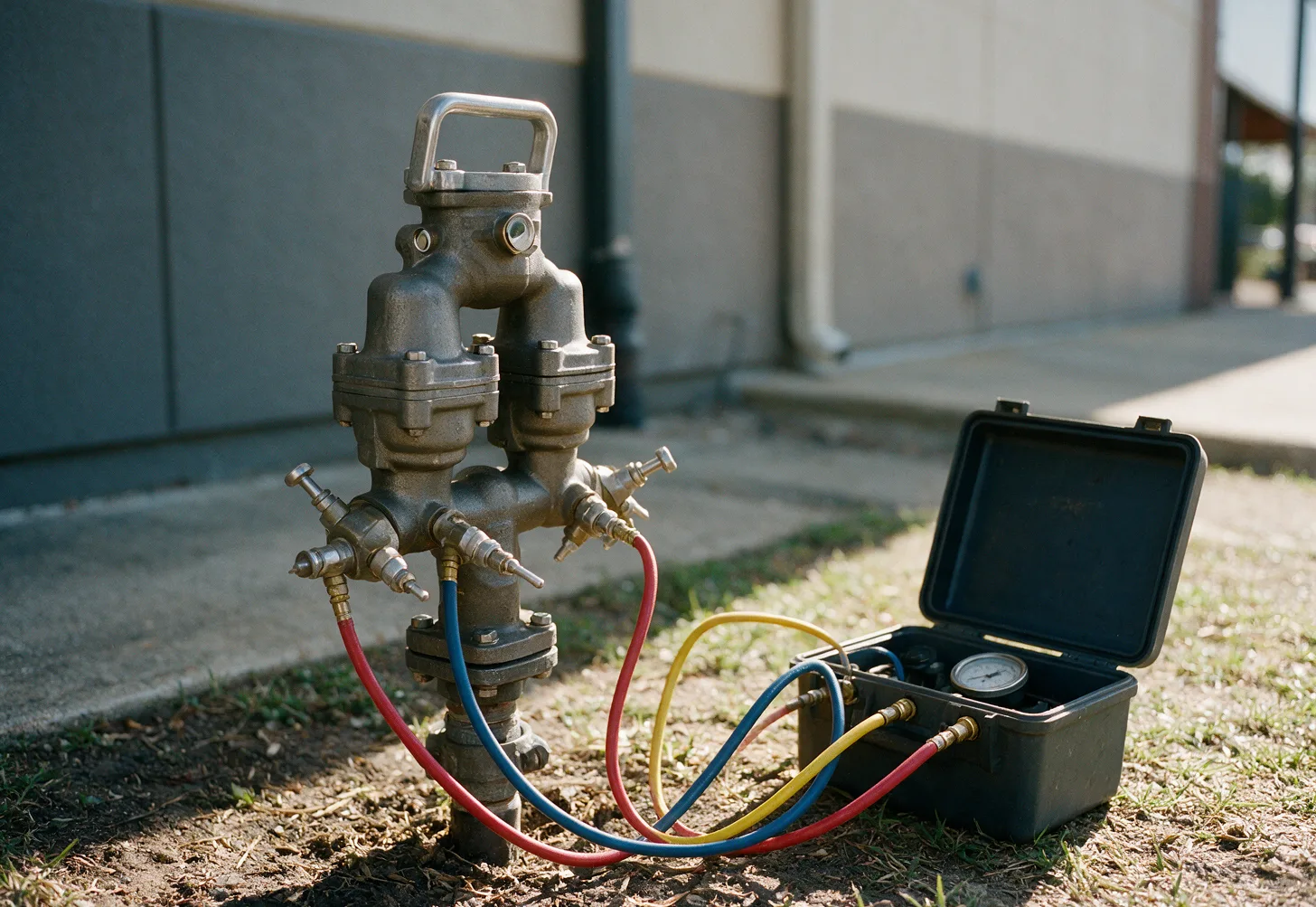
Backflow occurs when supply pressure drops or downstream pressure rises, forcing water from a cross connection back into the potable line. Our technicians isolate the assembly, attach a differential gauge to the test cocks, and record whether the first check holds at least 1 psi above the second while the relief valve opens at its factory setpoint of 2 psi differential.
We document each reading against the assembly model number and note any debris lodged against seats or diaphragms that could prevent closure. If readings fall outside tolerance the unit is tagged for repair or replacement before the next required test interval. Our technicians at Hollywood Backflow Certifications and Repairs complete backflow testing while confirming no cross connections exist in the USA.
Observable Indicators of Backflow Risk
- Water pressure fluctuates when nearby irrigation zones activate.
- Discolored water appears after fire hydrant flushing nearby.
- Soap or chemical taste in cold tap water after heavy rain.
- Reduced flow from outdoor hose bibs connected to a pressure zone.
- Visible drip from the relief port on a reduced pressure assembly.
Pressure Differential Test Procedure
Our technicians close the downstream shutoff and bleed the test cocks to zero the gauge. They then open the high side valve and watch for the needle to stabilize at the minimum required differential across each check. Any drop below the code threshold indicates seat wear or spring fatigue.
Next the relief valve is exercised by slowly closing the upstream shutoff until back pressure forces the relief to lift. The opening point is logged; failure to open at the correct psi differential signals a blocked relief port or stuck diaphragm that must be cleaned or replaced.
Common Assembly Failure Modes
Debris from untreated well water or lawn fertilizers wedges between the check disc and seat, allowing reverse flow under back siphonage. Scale buildup inside the body alters the hydraulic profile and changes the pressure at which the relief opens.
Thermal expansion in a closed system can push relief valves open repeatedly, scoring the rubber seat and creating a continuous drip that eventually erodes the bronze seat ring. Replacement of both the check cartridges and relief module restores the original pressure envelope.
Repair and Replacement Options
When only the check valves fail the test we remove the cartridge assemblies, clean the guides, and install new EPDM discs rated for the system temperature. The relief module is rebuilt with a fresh diaphragm and spring if its opening pressure deviates more than 0.5 psi from specification.
If the body shows internal erosion or the test cocks leak we recommend swapping the entire assembly. New units arrive pretested with stainless steel trim and are installed with dielectric unions to prevent galvanic corrosion at the pipe connections.
Homeowner Preparation Steps
Locate the backflow preventer on the main line after the meter and confirm both shutoff valves turn freely. Clear vegetation or debris from around the assembly so the test cocks remain accessible without risk of damaging nearby landscaping.
Note the model number and serial plate information on the assembly before the appointment. Shut off any irrigation timers the night before so residual pressure equalizes and the first check valve test reflects true static conditions rather than transient flow.
Backflow Testing questions
How often should Backflow Testing be performed?
Most jurisdictions require an annual test on assemblies protecting the potable supply. Our technicians compare current gauge readings to the original factory setpoints and note any drift caused by wear on the check springs or relief diaphragm.
What causes a relief valve to drip continuously?
A dripping relief valve usually indicates either thermal expansion pushing against a closed downstream valve or debris preventing full closure of the second check. We isolate the source by measuring static pressure on both sides of the assembly before deciding on repair.
Can a homeowner perform the test themselves?
Homeowners may visually inspect for leaks and confirm shutoffs operate but calibrated differential gauges and proper isolation sequences are required to produce readings accepted by water authorities. We carry traceable test equipment and log results directly.
What parts are replaced during a typical repair?
Common replacements include the check valve cartridges, relief valve diaphragm, and seat discs. All elastomers are swapped for fresh EPDM components compatible with chlorinated water while the bronze body is inspected for pitting before reassembly.
Schedule Backflow Testing
Contact us to arrange gauge testing of your backflow assembly and receive documented pressure readings for your records.