Leak Repair in the USA
Our technicians begin every Leak Repair call by isolating the main shutoff and performing a static pressure reading at the meter. A drop below normal operating range points to a breach downstream, often at threaded joints or corroded sections where water escapes under line pressure. This step prevents further volume loss and reduces the chance of a cross-connection forming when supply pressure falls below backflow preventer thresholds.
We map the visible piping run next, checking each accessible valve and coupling for seepage marks or mineral buildup. Leaks at these points frequently stem from thermal expansion stress or sediment abrasion inside galvanized lines. Once located, we select repair couplings or full valve replacements that restore original pressure without introducing new flow restrictions that could affect upstream devices. Pressure tests performed after leak repair by Hollywood Backflow Certifications and Repairs verify backflow prevention holds in the USA.
Early Indicators of Pipe or Valve Failure
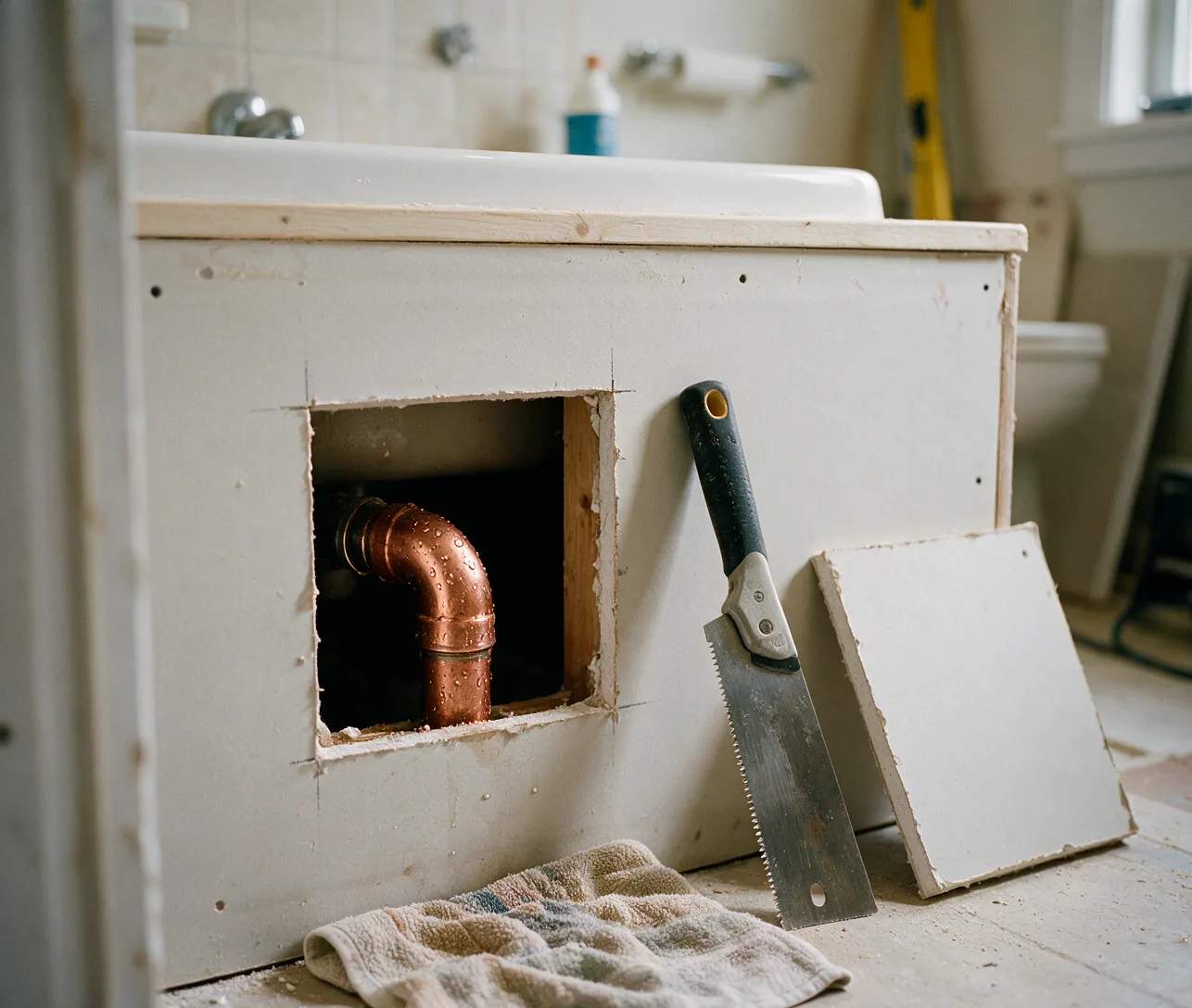
- Water meter spins with all fixtures closed indicating constant downstream loss.
- Reduced flow at multiple outlets after one fixture runs shows pressure diversion.
- Discolored water appears when a leak pulls sediment through a compromised joint.
- Hissing sound near shutoff valves signals gas or water escaping under pressure.
- Foundation dampness develops when underground supply lines lose integrity.
Pressure Testing and Joint Inspection Sequence
Technicians attach a calibrated gauge directly to the meter outlet and record static pressure before opening any branch valves. They then isolate each circuit one at a time, noting the exact drop that occurs when a particular loop is included. This isolates the leak to a single run without excavation. The method protects the water supply by confirming that any backflow preventer remains under adequate supply head during the test.
Next we examine every accessible union, elbow, and valve bonnet for telltale drips or corrosion rings. A failing packing nut on a gate valve often leaks first under cyclic pressure, allowing air ingress that later pulls contaminants when pressure rebounds. We tighten or repack only after confirming thread engagement and seat condition remain intact.
Repair Options Using Matched Materials
For copper lines we cut out the damaged segment and install a lead-free solder coupling or a press-fit connector rated for the existing pipe size. These maintain smooth interior walls so flow velocity and pressure recovery stay unchanged downstream. On galvanized steel we remove the corroded nipple and replace it with brass or stainless threaded fittings to eliminate future galvanic points.
When the leak occurs at a fixture shutoff we install a quarter-turn ball valve with stainless ball and PTFE seats. The full-port design avoids the pressure drop common with older globe-style stops. Each replacement is pressure tested to 150 psi for five minutes to verify zero seepage before restoring service.
Homeowner Steps Before Arrival
Locate the main shutoff valve usually near the meter or where the supply enters the structure. Turn it clockwise until it stops to halt flow and limit water loss. Note the last pressure reading from any available gauge and record which fixtures show reduced flow. Avoid opening access panels or disturbing insulation around pipes that may contain asbestos or conceal additional leaks.
If the leak is visible at a valve or joint, place a shallow pan beneath it to catch drips while waiting. Do not attempt to tighten packing nuts beyond hand snug or use chemical sealants, as these can mask the true leak path and complicate later diagnosis. Keep the area ventilated if gas odor is present.
Restoring System Integrity After Repair
After the new fittings are installed we reopen the main valve slowly while monitoring the gauge for rapid pressure rise. A controlled repressurization prevents water hammer that could damage other joints or the backflow preventer diaphragm. We then retest each branch to confirm flow volume matches pre-leak readings.
Final verification includes checking that no new cross-connection points were created at the repair site and that all isolation valves operate freely. This sequence ensures the entire distribution system returns to design pressure without hidden bypass routes that could allow reverse flow under future demand spikes.
Leak Repair questions
What causes most residential leaks?
Corrosion at threaded joints, thermal expansion stress on rigid copper runs, and sediment wear inside older galvanized pipe are the primary sources. Each produces a measurable pressure drop that our gauge readings isolate before excavation begins.
Can a homeowner safely stop a leak temporarily?
Closing the main shutoff halts flow. Placing a container catches drips. Further tightening or chemical products can mask the leak path and affect later pressure tests, so we recommend leaving those steps to technicians.
How do you confirm the repair holds pressure?
We apply a calibrated gauge to the meter and hold 150 psi for five minutes after each joint is completed. Any drop indicates an unseated seal that must be corrected before the system is returned to service.
Will a leak affect my backflow preventer?
Yes. A downstream pressure loss can allow the backflow preventer to open its relief port or create conditions where reverse flow becomes possible. Restoring line pressure eliminates that pathway.
Schedule Leak Repair
Contact Hollywood Backflow Certifications and Repairs for Leak Repair performed with pressure verification and valve integrity checks across the USA.