Backflow Preventer Repair in the USA
Backflow preventers use dual check valves and a relief valve to maintain positive pressure separation between potable water and non-potable sources. Our technicians measure the differential across each check during static and flow conditions to confirm the assembly meets code separation requirements before any repair begins.
When debris lodges in the second check or the relief port becomes restricted, reverse flow can occur under negative pressure events. We isolate the assembly, relieve line pressure, and document each valve seat condition to determine whether cleaning, seat replacement, or full body substitution restores the required hydraulic barrier. Hollywood Backflow Certifications and Repairs applies test procedures during backflow preventer repair to maintain system pressure and block contamination nationwide.
Warning Indicators
- Water pressure drops after the preventer during fixture use
- Visible discharge from the relief valve port during normal flow
- Rust particles or sediment appearing at cold water taps
- Test cocks show unequal readings between first and second checks
- Downstream fixtures exhibit intermittent air or colored water
Common Failure Points
Scale buildup on the first check seat allows leakage past the primary barrier when upstream pressure falls below downstream pressure. Our technicians record the static differential across each check before disassembly to isolate whether the failure originates at the seat, the spring, or the relief diaphragm.
Corrosion on the relief valve stem prevents the port from opening under back-siphonage conditions, leaving the assembly unable to relieve contaminated water. We verify spring tension and diaphragm flexibility on every unit before deciding on component renewal versus complete replacement.
Foreign material lodged between the second check and its seat creates a path for reverse flow during main line breaks. Technicians flush the body and inspect the seating surface under magnification to confirm the repair will hold the minimum required pressure differential.
Inspection Sequence
We shut off the upstream isolation valve, attach calibrated test gauges to the three test cocks, and record the opening point of the relief valve. These readings establish whether the assembly still provides the required 1 psi separation between checks under no-flow conditions.
Next we open each test cock sequentially to simulate back pressure and back siphonage while monitoring for leakage past the checks. Any measurable drop indicates the need for seat resurfacing or replacement of the check modules before the unit returns to service.
Finally we restore flow and confirm the relief valve remains closed under normal operating pressure. This last verification ensures the repaired preventer will protect the water supply against sudden pressure reversals without nuisance discharge.
Repair and Replacement Choices
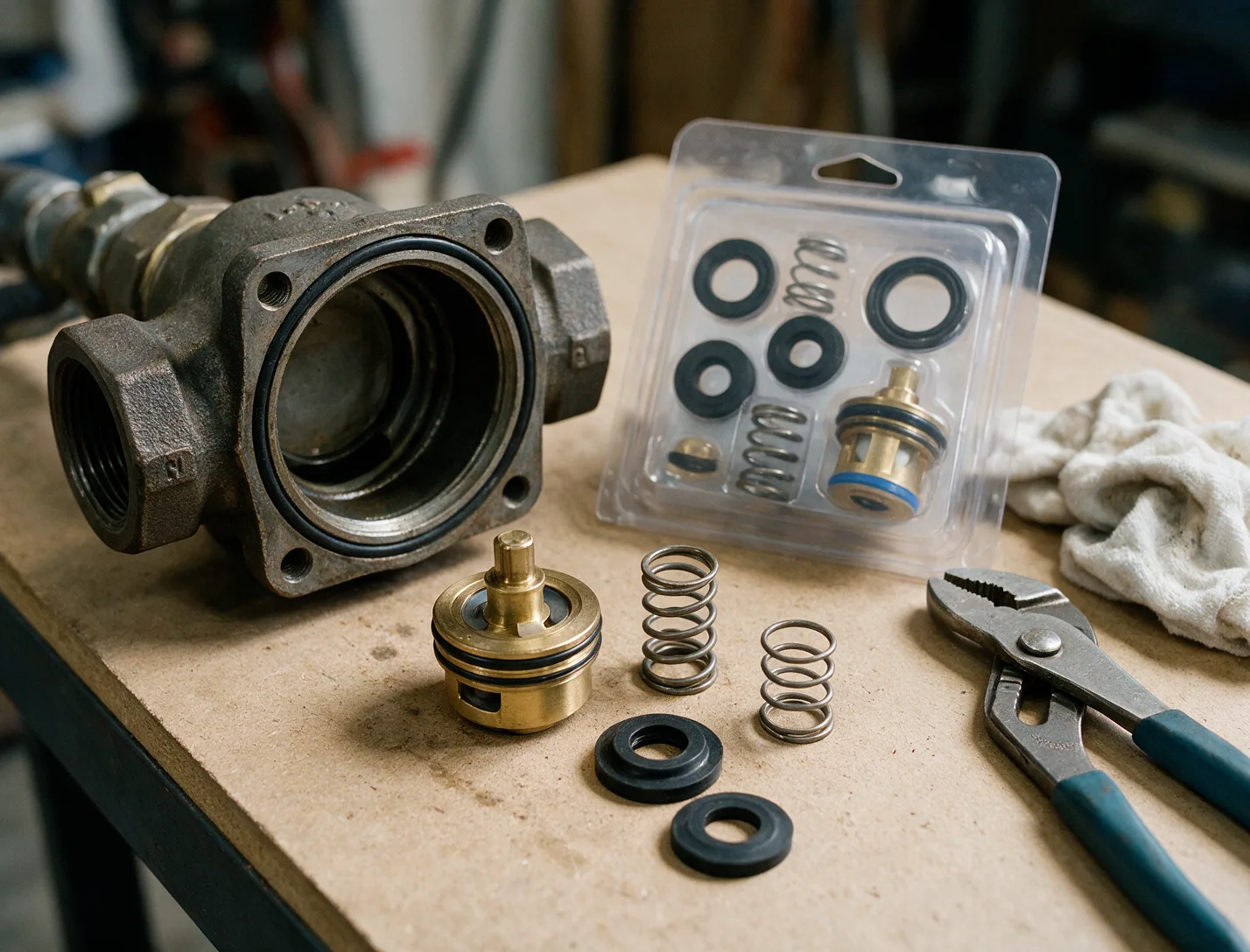
When only the check seats show wear, we replace the rubber discs and resurface the brass seats with fine emery to restore full contact. This approach preserves the original body while returning the assembly to the pressure differential originally designed into the unit.
If the relief valve diaphragm is torn or the spring has lost tension, we install a factory rebuild kit matched to the assembly model number. The new components restore the exact opening pressure and closing characteristics required by the original hydraulic design.
For bodies with cracked castings or stripped test cock threads we remove the entire assembly and install a new preventer of identical size and orientation. We select models with accessible test cocks and replaceable modules to simplify future diagnostic measurements.
Homeowner Preparation Steps
Locate the backflow preventer near the main shutoff and note any visible water dripping from the relief port. Photograph the assembly label showing model and size so our technicians can bring the correct repair parts on the first visit.
Close the nearest downstream fixture and open a cold tap to relieve line pressure, then close the main shutoff if you observe active discharge. These steps reduce the chance of additional water loss while the repair is scheduled.
Avoid operating irrigation valves or opening multiple fixtures until the unit is restored, because continued use with a failed preventer can draw non-potable water into the supply piping through any existing cross-connection.
Backflow Preventer Repair questions
How do technicians confirm a backflow preventer needs repair?
We attach test gauges to the three test cocks and measure the pressure differential across each check under static and flowing conditions. Readings below the required separation threshold indicate seat leakage or relief valve malfunction that must be corrected to maintain the cross-connection barrier.
What parts are commonly replaced during Backflow Preventer Repair?
Technicians typically renew the rubber check discs, relief valve diaphragm, and any worn springs. When body damage exists we install a complete matching assembly to restore the original pressure separation ratings without altering pipe alignment.
Can a homeowner stop water discharge from the relief valve temporarily?
Closing the upstream isolation valve reduces pressure on the checks and stops most relief discharge. Do not force the valve stem or cover the port, because these actions can mask an underlying check failure and allow contamination during the next pressure reversal.
Why does the repair process include multiple pressure measurements?
Each measurement isolates whether leakage occurs at the first check, second check, or relief valve. Documenting the exact failure point determines whether cleaning, partial rebuild, or full replacement is required to reestablish the designed hydraulic separation between potable and non-potable lines.
Backflow Preventer Repair Across the USA
Contact Hollywood Backflow Certifications and Repairs to schedule valve testing and component restoration that returns proper pressure separation to your assembly.