Drain Cleaning in the USA
Drain Cleaning addresses partial or full blockages that reduce hydraulic capacity in waste lines. Our technicians measure flow rates at accessible cleanouts and evaluate trap seal integrity to confirm that wastewater moves away without creating negative pressure zones that could pull contaminants backward into supply piping.
Common obstructions form from grease accumulation, mineral scale, or foreign objects that restrict pipe diameter. Technicians calculate expected velocity against observed drainage speed, then select mechanical or hydro jetting equipment sized to the line diameter so material is removed without damaging joints or creating new leaks. Drain cleaning conducted by Hollywood Backflow Certifications and Repairs ensures relief valves function correctly to safeguard the supply across the USA.
Observable Indicators of Restricted Flow
- Water level rises above the normal trap line during use
- Multiple fixtures drain slowly at the same time
- Gurgling sounds transmit through vent stacks
- Sewage odor appears near floor drains
- Recurring clogs after basic plunger attempts
Root Causes Inside Waste Piping
Blockages develop when fats cool and solidify along pipe walls, gradually narrowing the effective bore. Scale from hard water further reduces cross-sectional area until flow velocity drops below the self-scouring threshold of four feet per second.
Tree roots penetrate joints seeking moisture and expand inside the pipe, creating fibrous dams. Foreign objects flushed or dropped into lines lodge at changes in direction where velocity decreases, allowing debris to accumulate upstream.
Improper slope in horizontal runs causes solids to settle rather than remain suspended. Technicians verify pitch with levels before clearing to prevent repeat obstructions once the line is restored.
Diagnostic Measurements and Checks
Technicians isolate sections by closing cleanout plugs and introducing a controlled water column to observe static head loss over time. Pressure differentials across the clog indicate whether the restriction is partial or complete.
Camera inspection records pipe material, diameter, and defect locations while measuring distance from the access point. This data determines whether mechanical rodding, hydro jetting, or sectional replacement will restore design capacity.
Vent stack function is tested by observing trap seal movement during rapid drainage. A drop exceeding two inches signals negative pressure that could compromise the separation between waste and potable systems.
Clearing Techniques and Component Options
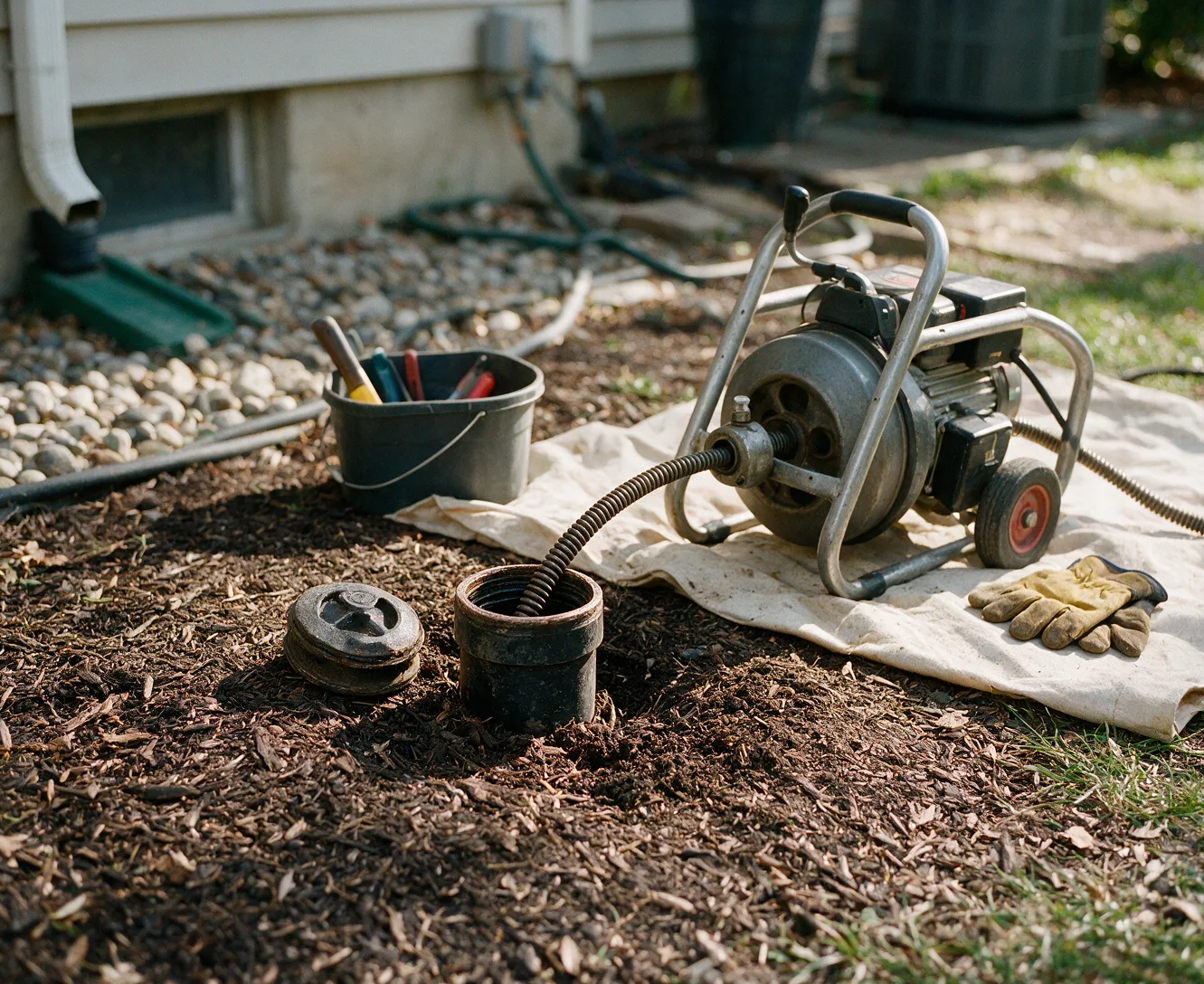
Cable machines fitted with cutter heads sized to pipe diameter break apart obstructions while technicians monitor torque to avoid wall penetration. Hydro jetting follows at 3,500 to 4,000 psi to scour residue from interior surfaces.
When roots are present, technicians apply mechanical root cutters followed by chemical inhibitors at approved concentrations to retard regrowth without affecting downstream treatment. Sectional pipe repair may be required where joints have separated.
Cleanout extensions or backwater valves are installed at grade where repeated blockages originate from municipal main surges. These devices maintain one-way flow and provide future access points without excavation.
Initial Steps Before Technician Arrival
Homeowners should shut off water to fixtures above the affected line and avoid repeated flushing that can force material into vent piping. Placing towels around floor drains contains any backup during the initial assessment.
Locate and expose the nearest cleanout cap outside the structure if accessible, noting its distance from the main stack. This allows technicians to begin testing without additional disassembly.
Document which fixtures are affected and the approximate time the slowdown began. These details help isolate the clog location relative to branch lines before equipment is selected.
Drain Cleaning questions
How do technicians confirm a clog location without excavation?
They introduce a camera head through cleanouts and record distance to the obstruction while measuring pipe diameter and material. Flow tests at multiple access points narrow the segment requiring clearing.
What pipe materials affect clearing method selection?
ABS and PVC tolerate higher jet pressures than older cast iron or clay. Technicians adjust cutter head type and water volume to match wall thickness and joint type to prevent fractures.
Can partial blockages still allow backups into fixtures?
Yes. When solids settle in low-velocity zones, the remaining flow can surcharge branch lines. Technicians measure residual capacity against fixture unit counts to decide if full restoration is needed.
Why test vent function during a drain service?
A blocked vent creates negative pressure that can siphon trap seals, allowing sewer gases and potential cross-connection risks. Airflow verification ensures the waste system remains isolated from the water supply.
Schedule Drain Cleaning
Contact our technicians to measure and restore proper drainage across the USA.